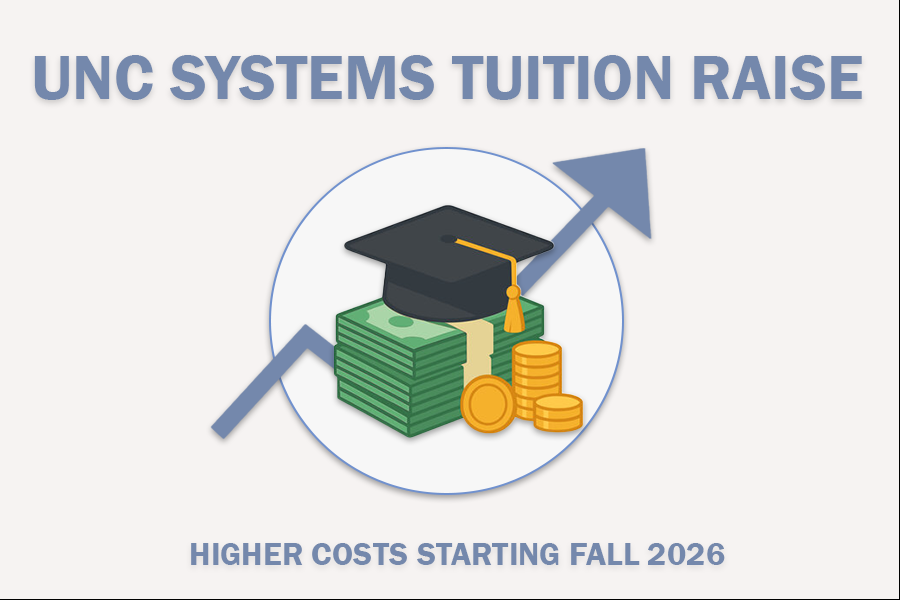
Tuition across the University of North Carolina system is finally seeing a rise after nearly a decade, which is a major shift for the schools within the UNC system, especially UNC Chapel Hill. Beginning in the 2026-27 school year, new students enrolling at Chapel Hill will see higher costs, while the current students will not be affected due to the system’s fixed tuition policy. After years of stable pricing and predictable costs, that stability is beginning to change at an abrupt rate within many UNC schools.
The increase in budget will be minor, nearly a rough $200, along with a proposed $53 fee, which is irrelevant to students already paying tuition; it’s the undergrads and new students who will see a significant rise, leaning towards the possibility of affecting future students negatively. School officials say it’s to maintain affordability and to bring in enough funding for residency and campus needs. And with the rising costs across colleges, higher expenses for staff and programs, and the state not providing financial support at the same pace, it is making it difficult for UNC schools to fund their campuses, but also for new-enrolling students to afford college across the UNC system schools. So, with years of frozen tuition as well as a sudden rise, even if little, could still be detrimental to those who didn’t see it coming or to those who can’t afford tuition due to the unexpected rise.
“I am proud to be a North Carolina resident and especially proud of our public universities. While I am not excited that there has been an increase in tuition this year, I feel it is inevitable due to inflation. But, I’m sure that operating costs have risen and will continue to rise as our gas prices continue to rise even more,” Amy Newsome stated.
There are various factors contributing to the rising prices of tuition across UNC schools, and it’s equally hard for colleges to keep up with demanding prices as it is hard for students and families to keep up with soaring gas and/or grocery prices.
“Price of goods, competitiveness of colleges in recruiting, and the appeal of the UNC system are all driving forces. Unfortunately, too many student loans companies are giving out money which actually allows the universities to raise cost and collect more money,” Marshall Canosa said.
Many young adults that strive to go to a college tend to struggle when getting funds to pay for a four-year tuition; and with how things are looking with UNC prices getting higher along with other everyday things, it limits the options students have for schools to attend in their area.
“It will make students reconsider the college path and there will be an increase in community college attendance because it is more affordable,” Canosa added.
More safer options for a student’s pocket include attending a community as it’s more cost effective and more affordable without creating extra weight on one’s shoulder. Community colleges are just as good as public ones and offer the same level of quality education a student deserve without the responsibility of paying a large tuition.
“My biggest concern is the increase in financial burden for those students who must borrow money to continue their education,” said Newsome.
In the end, rising tuition doesn’t only affect the students wallets. It’s shaping the decisions they make about their future. There are many students who are being forced to attend college they can not afford, and this is an issue in itself, one that may not be resolved any time soon.
“They will not be able to go to the school of their choice, it will be what they can afford,” Canosa stated.
The tuition rise across the UNC college systems has left many families and students uncertain about the future when it comes to enrolling in UNC schools. With Chapel Hill increasing its tuition and other schools following along, like UNC Charlotte, Greensboro, Wilmington, and the School of the Arts, questions about affordability will continue to swell, as well as frustration among those who believed tuition would stay stable and consistent for longer. Along with those worries, it concerns families that this might make colleges out of reach for students if increases continue.