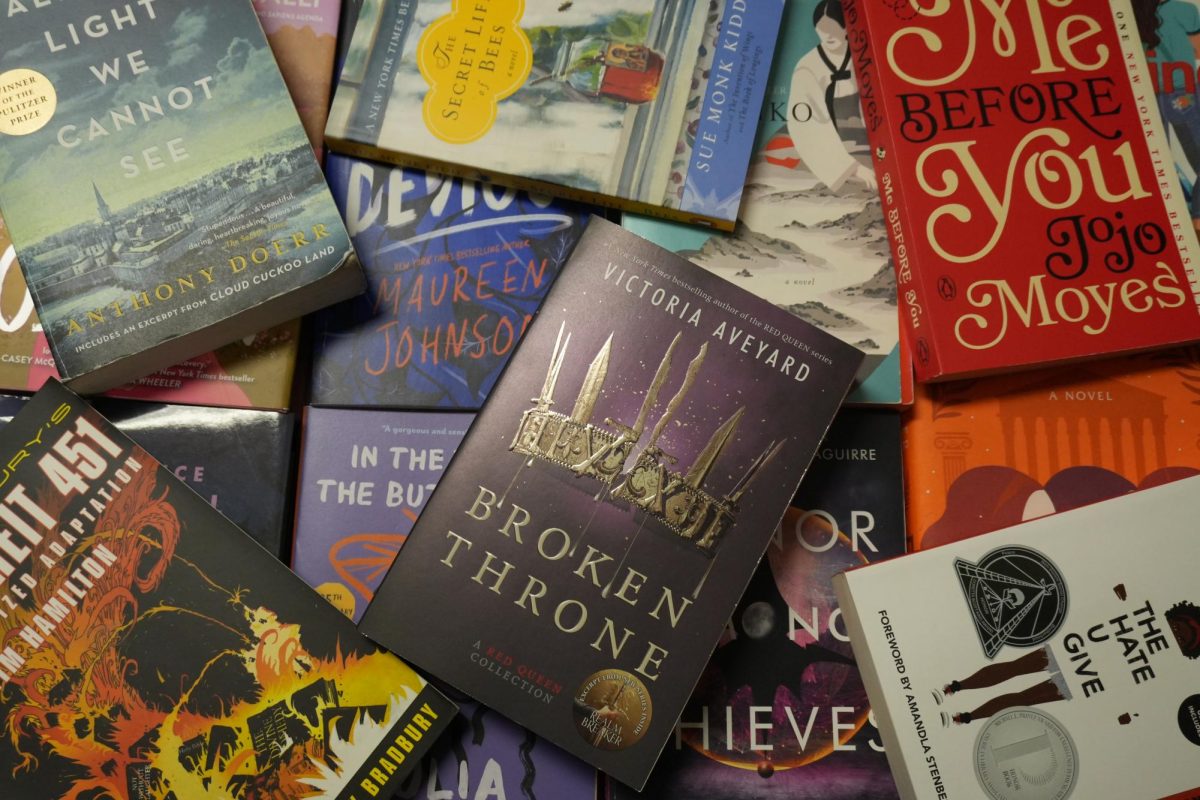
Throughout the U.S many states have begun monitoring the books that schools have available for students. This new House Bill demands that schools add all print and nonprint resources, but it excludes textbooks when they are for “independent use by students and school personnel outside of the standard course of study for any grade or course.” This means that students and school staff do not need to have textbooks checked if they are not for any class curriculum.
There have been many methods for copying books for parents to see. Some teachers have been doing it alone, while others have assistance. However all teachers have been using the same website that was given to them by the school librarian.
“The media coordinators gave us a website with an account, then we type in the ISBN number of the book, and then in almost every case the ISBN number links to the title, and you verify that it is in fact the book that’s in your room,” English teacher Andrew Serang said.
Although some teachers have not been as lucky, many teachers have hundreds of books that match different genres and themes. This new law adds unnecessary stress for teachers due to the added struggle of being able to help their students discover literature they can read.
“So I have about 800 titles in there, and it impacts my day-to-day instruction because my goal as an educator is to find a kid a book that they like. It is hard to do that when they have been forced to read for years, and if I have to say you can not read theirs or this, it is going to add more reasons why they can not read something,” English teacher Brooke Stone said.
Many teachers disagree with this current law; many of these teachers even have families and children to experience the struggles personally. Even today, there are ways to circumvent the need for this law, considering how technology has changed children’s lives.
“I have a child. I am not afraid of them picking up a book that has different beliefs because I want her to learn what else is out there, so we can talk about what else is out there, or why mom and dad do not support that concept. If you want to control what your children are learning, you can homeschool them. Public school is available for all kids, all belief systems, and we should have material to reflect that,” Stone said.
There are some students who agree with this new law. Their only caveat is that it should be solely for younger children, mainly for K-5th grade.
“I think it would be okay for elementary. Kindergarten through fifth grade should have some parental control over what they can read, because some topics could be too mature. For middle and high schoolers, mature topics are already assigned for reading, so it should be allowed to have those accessible in libraries without parental permission,” junior Kate Rajapaksa said.
In essence, this new book law should not affect your day-to-day life as a student. However, keep in mind that the law can only affect students if their parents do not approve of certain books and their themes.