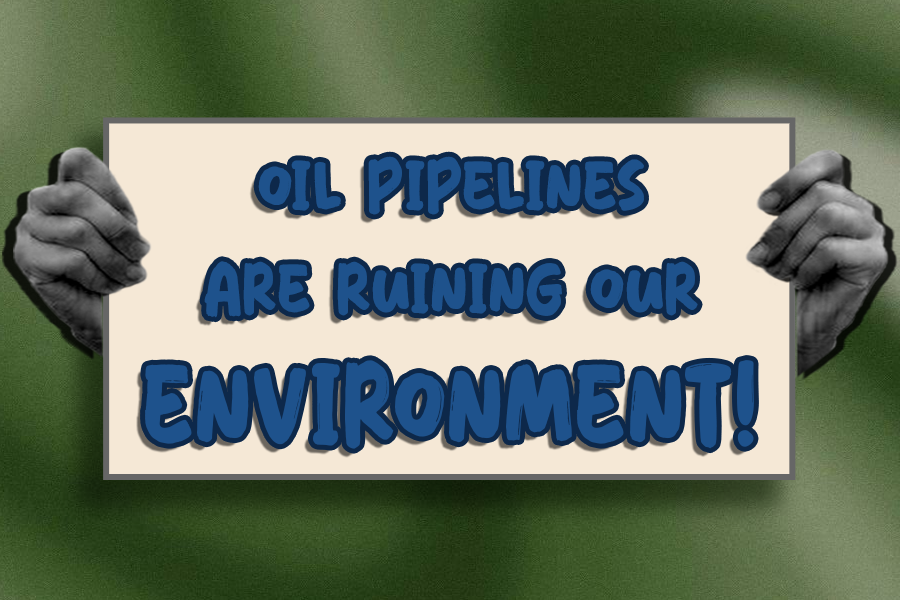
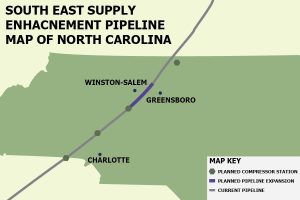
The Williams company is the parent company to the smaller Trans Continental Pipeline company (Transco) that creates and produces oil pipeline projects. Together, they produce about 20% of interstate natural gases and they have recently made a plan to make new and repurpose old pipelines throughout the Southeast. These pipes are going to span from Georgia, South Carolina, North Carolina, Virginia and Alabama. They pride themselves on being community-oriented and listening to issues from the people they are affecting and being as clean as possible. Despite this, they might not be as clean as they are making themselves out to be. This newer piping plan, the Southeast Supply Enhancement project, was created in an effort to keep up with the ever-expanding demand for affordable clean energy. The pipes that are coming through North Carolina, more specifically the Triad, are not only going to negatively impact the environment but also harm millions of people within the state.
“The company Transco operates under the bigger business the Williams company is proposing to build a large diameter high pressure methane gas line that would go through North Carolina and Virginia which would also include some changes to compressor station facilities in Virginia, North Carolina, South Carolina, Georgia and Alabama. This would be an expansion of their existing 10,000 mile system that spans from Texas through the Southeast all the way up towards New York City laying brand new pipe,” Juhi Modi North Carolina Field Coordinator at Appalachian Voices said.
One of the biggest issues with these pipelines lies in the construction of the compressor station facilities needed for the pipes. They are going to need to make and or repurpose existing compressor stations that, if run by gas, can pose harm to the environment.
“Compressor stations are facilities that pressurise gas to keep it flowing through pipes that can be alternatively powered by electric turbines. The ones powered by gas release harmful chemicals into the air that can negatively impact the health of nearby residents,” Modi said.
Compressor stations need turbines to operate, which can either be gas or electric. Both of those kinds of turbines will be used in the Triad, but one poses more harm than the other.
“Some of the ones being expanded use gas-fired turbines and others use electricity. Particularly, the ones being used in Lexington and Mooresville, NC are using the gas, but in other areas they are using electric alternatives and it is unclear as to why they are only choosing to in specific areas,” Modi said.
Even if the company decided to use all electric turbines, that would still not alleviate the overall damage done from the construction on its own. It has the potential to negatively impact residents within states where construction is taking place when it comes to things needed daily, like water. This has a bigger implications for states on the east coast that also use local water resources and distribute in their area.
“Construction of pipelines can be very destructive to land and the water it crosses and these would cross more than 150 streams and wetlands because construction can be destructive. This would negatively impact species and ecosystems in that area, as well as residents’ access to clean drinking water. For example, within Davidson County, the construction would cross about five streams that are sources for drinking water in Lexington and Thomasville, which can cause increased levels in sediment that carry bacteria and harsh chemicals,” Modi said.
Cleaning sediment out of water is not easy. The water facilities would have to find ways to alleviate the cost of cleaning, which could potentially fall back on the consumer and affect day-to-day living.
“Local water facilities would have to find new ways to clean up the sediments which could raise consumer cost to help afford the cleaning. Sometimes sediments can stay in water for years and can be difficult to completely remove. Land is also heavily affected by the destructive nature of this kind of construction. People with farms that can be crossed by the pipelines can see reduced crop yields, increased flooding and issues with providing for livestock,” Modi said.
The construction of these pipelines will also financially affect residents in all states affected by the construction and can potentially see a change in cost for bills. Companies will charge consumers to help offset the cost of construction for themselves.
“These pipelines are connected to a whole web of methane gas infrastructure that Duke Energy wants to build that we as customers could be forced to pay for. And so these communities will be affected, not just in those very direct ways, but also in our electric bills across the state to pay for construction and the gas that flows through these projects,” Modi said.
In Lexington and Morrisville North Carolina, public hearings were held in order to gauge public opinion within communities and people were overwhelmingly against the passing of the project. The people who were for the project had been residents who had worked in the oil industry and tried to speak towards economic and reliability perspectives, but when it comes to how dependable gas infrastructure can be, their statements were not entirely true.
“If you wanna talk about reliability, look at winter storm Elliott that happened in 2022. It led to power outages for about 500,000 North Carolinians because of failures at methane gas power plants and other infrastructure. So, the reasons for the project that they brought up at the hearing were not related to air quality and they have talking points that do not tell the full story. There have been hundreds of residents across counties in Virginia and North Carolina who have spoken out and taken action in a variety of ways,” Modi said.
Community and organization leaders have made a continued effort outside of these meetings to reach out to the Williams company to get a better understanding of the project and how it will affect residents. The Williams company prides themselves on public outreach despite this they have not been very responsive or receptive.
“In Forsyth County, the county commissioner invited Transco to come and give a presentation as well as residents to share their concerns and how each side views the project. The Transco representatives showed up extremely late because they had to come from out of state. They did not have the same stake in this project and gave very unsatisfactory answers,” Modi said.
Instead of hearing community concerns, they have posed as residents to garner public support in an effort to get the project passed quickly. These emails do not accurately reflect public opinion and take the voices from people who have concerns about the project or might not even know about it.
“Williams hired a third-party agency that uses AI to fake emails of support and send those to Forsyth County commissioners and they did this over a series of months and every single day they received dozens of emails from people seeming to have real names and addresses. The commissioners reached out, thanking them for showing support and the people would reach back out and claim they never did that,” Modi said.
Advocacy groups have been regularly hosting public hearings to try to gain traction against the project and connect with communities in a way they feel the Williams company has not. They aim to get enough people involved so they can attempt to bring these issues to the state and federal levels.
“Local opposition has been helpful in the effort to combat this project. Public outreach and showing discontent can help representatives to understand public opinion and help enact change.
The town of Midway in Davidson County, the Forsyth and Guilford county commissioners, as well as the city of Greensboro. When elected officials take stances like this, it helps represent the people’s unhappiness and they are taking a formal position which can help at the state and federal levels. Thousands of people have signed petitions across the state and country because this project is in front of the federal energy regulatory commission, which oversees pipelines across state lines,” Modi said.
Even though the Williams company is a big corporation with lots of power, that does not mean the individuals in communities affected can not do anything. The voice of the community can enact more change than if it were to just happen and there was no choice but to bear the repercussions.
“I think that people are aware it is an uphill battle and Williams Company is a huge corporation that makes billions of dollars a year so they have money, resources and power. Despite this, here in NC, we have gone up against massive entities like Duke and Dominion Energy and won so that should not discourage us. For example, the Atlantic Coast pipeline was defeated because of community opposition in 2020, which was backed by those two companies. There were tons of legal battles and outstanding permit challenges and ultimately it just became infeasible for them to move forward because it was too expensive and delayed,” Modi said
Students have expressed their concerns about the pipelines, worrying about things like pollutants and the way it might affect them every day.
“I do not think it is a good idea because I have to use water every day. I use it to shower, clean water plants and other things. I do not think this should pass because it would harm a resource that people use constantly,” senior Kareena Carrington said.
Students also feel the overall potential positive impacts are not worth the overwhelming negatives. They worry more about the effects concerning the environment and pollution and do not care as much about the economic benefits.
“I do not believe it is worth building it for the single pro of boosting us upward in the market. It is going to produce harmful gasses that the environment will be exposed to, as well as the lives of the general public who live near there. The sediments and pollution that would take years to get rid of is not worth the supposed economic boost, even if the effects were way less damaging to everything surrounding it,” senior Gieselle Jimenez said.
The South East supply project is being actively combated by environmentalist groups across these proposed areas. Issues with these proposed plans can be heard by connecting representatives and reaching out to groups in your area to see what can be done.